



Protruding knee bones or bone spurs (osteophytes) can be a sign of osteoarthritis, a degenerative joint disease caused by damage to the cartilage within the joint. Cartilage functions as a cushion that allows the ends of bones to move smoothly. When this cushioning layer becomes thin or damaged, the bones begin to rub against each other, leading to pain, stiffness, and reduced joint function.
In osteoarthritis, the formation of protruding knee bones or bone spurs occurs as the body’s natural attempt to repair joint damage when cartilage wears away. This condition triggers additional bone growth along the edges of the joint in response to increased pressure, inflammation, and friction between bones. Although this process is essentially a self-healing mechanism, it instead results in abnormal bone growth.
When osteoarthritis reaches a severe stage, Mandaya Royal Puri Hospital offers a modern solution in the form of robotic-assisted knee replacement surgery (partial or total) using the advanced CORI robotic system.

Contents
Protruding Knee Bones and Other Osteoarthritis Symptoms to Watch Out For
Osteoarthritis symptoms generally develop gradually and may worsen over time. Common symptoms include:
- Joint pain that occurs during or after activity
- Joint stiffness, especially after waking up or following long periods of inactivity
- Tenderness, where the joint feels painful when light pressure is applied
- Reduced flexibility, making it difficult to move the joint through its full range of motion
- A grating sensation in the joint, often accompanied by cracking, popping, or crepitus during movement
- Joint swelling caused by inflammation of the surrounding soft tissues
What Are the Risks If Osteoarthritis Is Left Untreated?
Osteoarthritis is a progressive disease that can worsen over time and often leads to chronic pain. Joint pain and stiffness may become increasingly severe, making daily activities difficult to perform.
In addition, prolonged pain, joint stiffness, and limited mobility caused by osteoarthritis may contribute to depression and sleep disorders.
Robotic-Assisted Osteoarthritis Treatment at Mandaya Royal Puri Hospital
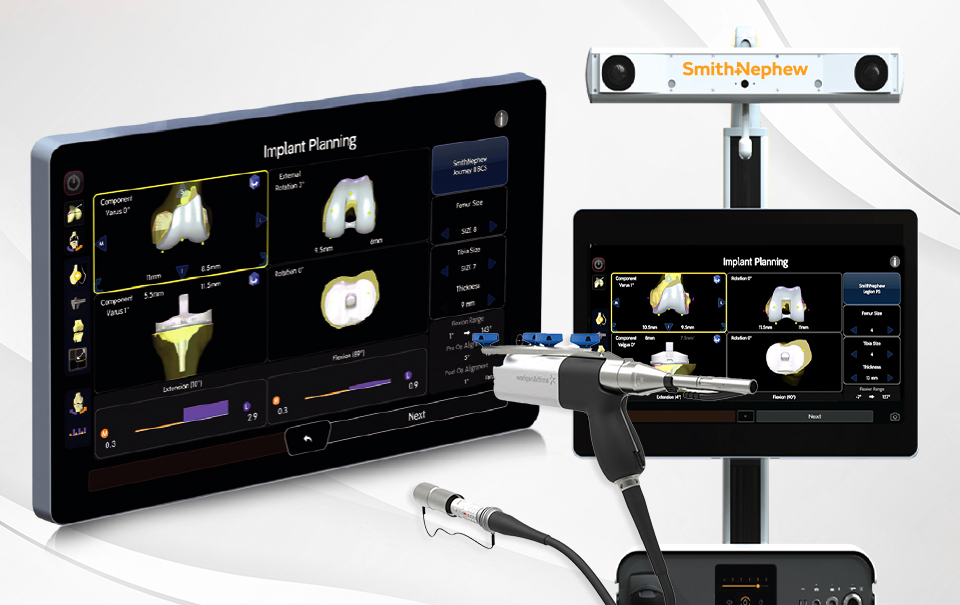
If conservative treatments do not provide optimal results, doctors may recommend knee replacement surgery for severe osteoarthritis cases. At Mandaya Royal Puri Hospital, both partial knee replacement and total knee replacement procedures are available using the CORI robotic-assisted method.
CORI is a robotic technology developed to enhance precision and accuracy in knee replacement procedures, whether partial or total. This robotic system assists orthopedic specialists in detailed surgical planning, ensuring optimal implant positioning and precise removal of damaged bone and tissue.
Advantages of Knee Replacement Surgery with the CORI Robot at Mandaya Royal Puri Hospital
1. Supports UKA and TKR in a Single System
The CORI knee robot is designed to perform two main procedures: Unicompartmental Knee Arthroplasty (UKA) and Total Knee Replacement (TKR). This allows orthopedic surgeons to choose the most appropriate procedure based on the extent of knee damage—whether partial or complete replacement.
2. The First Knee Robot Approved by the FDA for Revision Surgery
CORI is the only knee robotic technology approved by the U.S. Food and Drug Administration (FDA) for revision knee surgery. Revision procedures, which involve replacing old implants with new ones, are more complex. With CORI robotic support, revision surgeries can be performed with greater precision, control, and safety.
3. No CT Scan or MRI Required Before Surgery
Unlike other robotic systems, CORI does not require preoperative CT scans or MRI. Knee anatomy mapping is performed directly during surgery. The robot generates a real-time 3D model of the patient’s knee, enabling accurate implant placement, ligament balancing, and a more personalized surgical plan.
4. Uses Durable OXINIUM Implants
CORI is compatible with OXINIUM implants, a specialized material designed to minimize wear. Laboratory testing shows that these implants can last up to nine times longer than conventional materials, allowing them to remain effective for decades and serve as a long-term solution for patients.
5. Globally Used and Scientifically Proven
The CORI knee robotic technology has been used in more than 30 countries and is supported by hundreds of scientific publications in international medical journals. This global recognition reflects CORI’s effectiveness, safety, and innovation in supporting precise modern knee replacement surgery.
For easier access to services, use the Chat via WhatsApp, Book Appointment feature, or the Care Dokter app, available for download on Google Play and the App Store, to schedule visits, view queue numbers, and access complete information.