


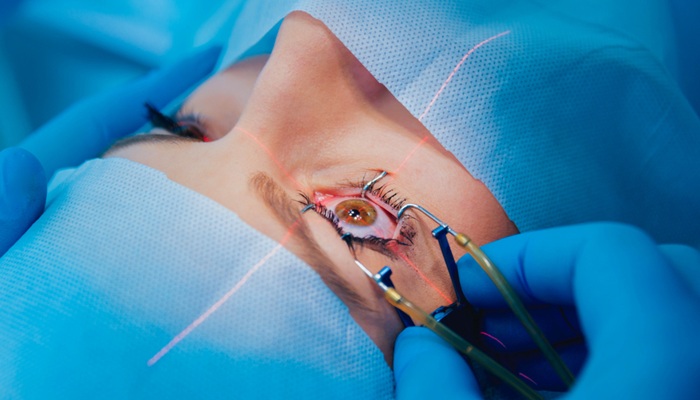
Cataracts are a condition in which the eye’s lens, which should normally be clear, becomes cloudy, causing vision to appear blurred, hazy, or as if covered by fog. This condition generally develops gradually and is commonly associated with aging, although it may also be triggered by factors such as diabetes, eye injuries, or long-term use of certain medications. In conventional cataract surgery, removal of the cloudy lens is typically performed through a relatively larger incision, with a longer procedure time and recovery period compared to more modern techniques.
As medical technology continues to advance, modern cataract surgery is now available at Mandaya Royal Hospital Puri using the phacoemulsification technique. This method offers a shorter procedure time, and most patients are able to go home shortly after the treatment.

Contents
Understanding Phacoemulsification Cataract Surgery at Mandaya Royal Hospital Puri
Phacoemulsification cataract surgery is a minimally invasive surgical procedure used to remove cataracts from the eye. This technique is designed to provide safer and more comfortable treatment for patients, with a lower risk of complications compared to conventional cataract surgery.
During the procedure, the doctor uses ultrasonic energy to break up the cloudy natural lens of the eye into small fragments. These fragments are then gently suctioned out through a very small incision, allowing the surrounding eye tissue to remain well preserved.
After the cloudy lens is removed, an artificial lens, known as an intraocular lens (IOL), is implanted to replace the function of the natural lens. This method allows for faster recovery, enabling patients to resume daily activities sooner than with traditional cataract surgery techniques.
What Are the Advantages of Phacoemulsification Cataract Surgery?
The advantages of phacoemulsification cataract surgery compared to conventional methods include the following:
- Minimally invasive: The incision made during phacoemulsification is very small, resulting in minimal trauma to the eye and faster healing.
- Less postoperative pain: Because the procedure is minimally invasive, postoperative pain and discomfort are generally reduced, allowing many patients to return to normal activities within a few days.
- Lower risk of complications: Smaller incisions combined with modern technology help reduce the risk of complications such as infection or bleeding, and the procedure is typically performed on an outpatient basis.
- More optimal visual outcomes: The precision of ultrasonic instruments helps achieve clearer and sharper vision after surgery.
- Wide range of intraocular lens options: Patients can choose from various types of intraocular lenses, including monofocal, multifocal, and toric lenses, according to their individual visual needs.
How Is Phacoemulsification Cataract Surgery Performed?
In general, the phacoemulsification cataract surgery procedure includes the following steps:
- Administration of anesthesia: Topical or local anesthesia is given to reduce pain and discomfort. The area around the eye is sterilized before the procedure begins.
- Creation of a small incision: The eyelid is held open using a speculum. The doctor makes a small incision on the side of the cornea to access the cataract and injects a special fluid to separate the cataract from its capsule.
- Insertion of the ultrasonic probe: A small ultrasonic probe is inserted through the incision to emit ultrasonic waves that break up the cloudy lens.
- Removal of the cataract: The fragmented and emulsified lens is then suctioned out of the eye.
- Implantation of the intraocular lens: An artificial lens is implanted to replace the damaged natural lens. The small incision usually closes and heals on its own without the need for stitches.
Ophthalmologists Specializing in Phacoemulsification Cataract Surgery at Mandaya Royal Hospital Puri

Phacoemulsification cataract surgery at Mandaya Royal Hospital Puri is performed by experienced and highly qualified ophthalmologists, including dr. Olly Congga, Sp.M.
dr. Olly Congga, Sp.M completed his medical degree as well as his specialization in ophthalmology at Hasanuddin University. To continuously enhance his expertise and keep up with developments in ophthalmology, he actively participates in various national and international training programs, courses, and seminars. These include the 32nd Annual Meeting of the Asia-Pacific Association of Cataract and Refractive Surgery in Kyoto in October 2019 and the 34th Asia-Pacific Academy of Ophthalmology Congress in Bangkok in March 2019.
In his clinical practice, dr. Olly handles a wide range of eye care procedures. Services he provides include cataract surgery, LASIK procedures, intraocular lens implantation, eye biometry examinations, and pterygium surgery.
dr. Olly Congga, Sp.M’s practice schedule at Mandaya Royal Hospital Puri:
- Monday: 16.00 – 18.00 WIB
- Wednesday: 08.00 – 09.30 WIB
- Thursday: 08.00 – 10.00 WIB
- Saturday: 13.00 – 15.00 WIB
To make your visit more convenient, you can use the WhatsApp Chat feature, Book Appointment service, or the Care Dokter application—available for download on Google Play and the App Store—to schedule visits, check queue numbers, and access other complete information.