


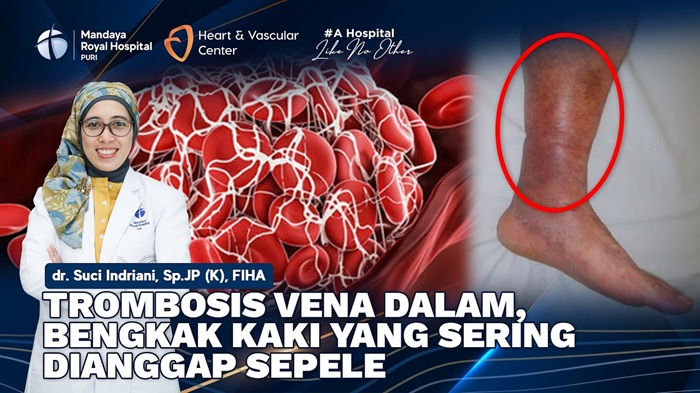
Have you ever experienced swollen legs after a long journey or following surgery? Be careful—do not immediately decide to get a massage. Swollen legs can be a sign of a serious condition known as Deep Vein Thrombosis (DVT), a blockage in the blood vessels that can be fatal if not treated promptly.

Contents
What Is Deep Vein Thrombosis (DVT)?
Deep Vein Thrombosis (DVT) is a condition in which a blood clot (thrombus) forms in the deep veins, most commonly in the legs. dr. Suci Indriani, Sp.JP (K), FIHA, a cardiologist and vascular specialist at Mandaya Royal Hospital Puri, explains:
“DVT is the presence of a blood clot in the venous blood vessels. Veins are the vessels that carry blood back from the legs and other organs to the heart.”
According to data from the Mayo Clinic, DVT most frequently occurs in the deep veins of the legs, thighs, or pelvis. This condition is dangerous because the clot can break loose and travel to the lungs, causing a pulmonary embolism, which can be life-threatening.
Why Has DVT Become More Common Since the Pandemic?
Since the COVID-19 pandemic, the number of DVT cases has increased significantly. dr. Suci explains:
“During the COVID era, this condition became much more prominent. COVID causes clotting disorders, making the blood easier to clot. Many COVID patients experienced swollen legs.”
A study published in the journal Blood (2022) confirmed that COVID-19 patients have a higher risk of blood clots. The study identified COVID-19 as a thromboinflammatory disorder that increases the incidence of venous thromboembolism (VTE), including pulmonary embolism and DVT. Data from PMC (2025) recorded a DVT incidence of up to 14.8% in COVID-19 patients.
Another study published in Circulation (2022) found that the risk of DVT remains elevated for up to 49 weeks after a COVID-19 diagnosis, with a hazard ratio of 1.99 at week 49, indicating long-term effects on blood clotting.
The Three Main Causes of DVT: Virchow’s Triad
dr. Suci explains that there are three main causes of DVT, known as Virchow’s Triad:
1. Damage to the Blood Vessel Wall
“This occurs when there is damage to the vessel wall,” explains dr. Suci. This can result from injury or medical procedures such as central venous catheter insertion or dialysis access. According to Cleveland Clinic, vein injury from surgery or trauma increases the risk of clot formation.
2. Blood Clotting Disorders
“The blood itself can have abnormalities, such as during COVID, when it becomes easier to clot due to hyperviscosity,” adds dr. Suci. Some individuals also have inherited clotting factor deficiencies, which make blood thicker and more prone to clotting.
3. Stasis or Sluggish Blood Flow
“The third factor is stasis, meaning the blood flow is slow,” says dr. Suci. This often occurs in patients who are immobilized for long periods, such as after major surgery. For example, patients undergoing total hip replacement often require prolonged bed rest, leading to reduced blood flow.
According to Penn Medicine, prolonged immobility—such as sitting for long periods during travel—can increase the risk of DVT because the calf muscles are not contracting to assist blood circulation.
Who Is at High Risk for DVT?
dr. Suci Indriani identifies several high-risk groups:
1. Patients with a Previous History of DVT
“If swelling occurs in someone with a history of DVT, especially after COVID, they should not get a massage,” emphasizes dr. Suci.
2. Post–Major Surgery Patients
Patients who undergo major surgeries, especially involving the hip, knee, or ankle, and experience prolonged immobility are at increased risk. Doctors usually prescribe preventive blood thinners in such cases.
3. Individuals with a Family History of DVT
A family history of DVT may increase one’s risk. According to WebMD, genetic factors such as Factor V Leiden or prothrombin gene mutations can increase clotting risk.
4. Long-Distance Travelers
Prolonged immobility during long flights or trips can increase the risk of DVT. “If your legs swell after a long flight, get them checked—don’t go straight for a massage,” says dr. Suci. The NHS UK notes that journeys longer than three hours increase DVT risk.
5. Patients with Autoimmune Diseases
Autoimmune disorders can affect blood clotting, making clots more likely to form.
6. Cancer Patients
“Cancer itself promotes blood clotting,” explains dr. Suci. “If a cancer patient experiences leg swelling, it should be medically evaluated immediately, as it is highly suspicious for DVT.”
Studies from StatPearls (2023) confirm that patients with active cancer often require thromboprophylaxis due to increased thromboembolic risk.
Distinguishing DVT-Related Swelling from Other Conditions
Not all leg swelling is the same. dr. Suci explains:
“A sprain usually causes localized swelling around a specific joint with a history of injury. DVT-related swelling may occur suddenly after surgery or trauma, and the swelling pattern is usually different.”
According to Mayo Clinic, common symptoms of DVT include:
- Swelling in one leg
- Leg pain resembling cramps
- Warmth in the affected area
- Skin discoloration
However, USA Vein Clinics reports that nearly 50% of DVT cases show no obvious symptoms until complications such as pulmonary embolism occur.
How Is DVT Diagnosed?
dr. Suci emphasizes the importance of proper examination:
“The first step is a physical examination to assess the swelling pattern, followed by specific clinical tests.”
If DVT is suspected, further tests include:
1. Laboratory Tests
The most common test is D-dimer, which indicates clot formation and breakdown. Elevated D-dimer levels are commonly found in severe COVID-19 cases.
2. Ultrasound Examination
Duplex ultrasound of the blood vessels helps detect blockages or impaired blood flow and is one of the primary diagnostic tools for DVT, according to Cleveland Clinic.
DVT Treatment: From Medication to Catheter-Based Therapy
Once DVT is diagnosed, treatment options include:
1. Minimally Invasive Procedures (Catheter-Based Therapy)
- Clot aspiration
- Clot fragmentation and removal
- Thrombolytic drug delivery
2. Medication Therapy
Treatment with blood thinners, either oral or injectable, is common. According to Penn Medicine, most patients require anticoagulant therapy for at least three months.
Common anticoagulants include:
- Intravenous heparin
- Low molecular weight heparin
- Warfarin
- Newer oral anticoagulants such as rivaroxaban, apixaban, dabigatran, and edoxaban
Dangerous Complications of DVT: Pulmonary Embolism
The most serious complication of DVT is pulmonary embolism (PE). According to Mayo Clinic, PE occurs when a clot travels to the lungs and blocks blood flow, which can be fatal.
Emergency symptoms include:
- Sudden shortness of breath
- Chest pain that worsens with deep breathing
- Coughing up blood
- Rapid or irregular heartbeat
- Dizziness or fainting
StatPearls data shows mortality rates of approximately 6% for DVT and 12% for pulmonary embolism within one month of diagnosis.
Preventing DVT: What You Can Do
During Long Trips:
- Walk or stretch every 1–2 hours
- Perform ankle and foot exercises
- Stay well-hydrated
- Avoid alcohol
- Wear loose clothing
- Use compression stockings if recommended
After Surgery:
- Mobilize as soon as possible
- Use compression stockings
- Follow anticoagulant recommendations
- Perform prescribed leg exercises
General Prevention:
- Maintain a healthy weight
- Quit smoking
- Stay physically active
- Consult your doctor if you have risk factors
Why Choose Mandaya Royal Hospital Puri for DVT Treatment?
Located in West Jakarta, Mandaya Royal Hospital Puri is a referral hospital with comprehensive facilities for cardiovascular and vascular care. The hospital has received multiple prestigious awards, including:
- Most Comprehensive Neurology Service Hospital – CNBC Awards 2024
- Most Comprehensive Breast and Cancer Center Hospital – CNBC Awards 2023
- Neurology Service Provider of the Year in Indonesia – GlobalHealth Indonesia Summit Conference & Awards 2025
With experienced specialists such as dr. Suci Indriani, Sp.JP (K), FIHA, advanced diagnostic technologies, and complete laboratory services, Mandaya Royal Hospital Puri is a trusted choice for DVT diagnosis and treatment.
Deep Vein Thrombosis is a serious medical condition that requires immediate attention. As emphasized by dr. Suci Indriani, swollen legs should never be taken lightly or treated with massage without proper evaluation.
If you experience leg swelling, especially after:
- Long-distance travel
- Major surgery
- COVID-19 infection
- Or if you have other risk factors
Seek medical consultation immediately. Early detection and treatment can prevent life-threatening complications such as pulmonary embolism.
To make your visit easier, please use the Chat via WhatsApp feature, Book Appointment, or the Care Dokter application, which can be downloaded on Google Play and the App Store to help manage visits, view queue numbers, and access other complete information.