


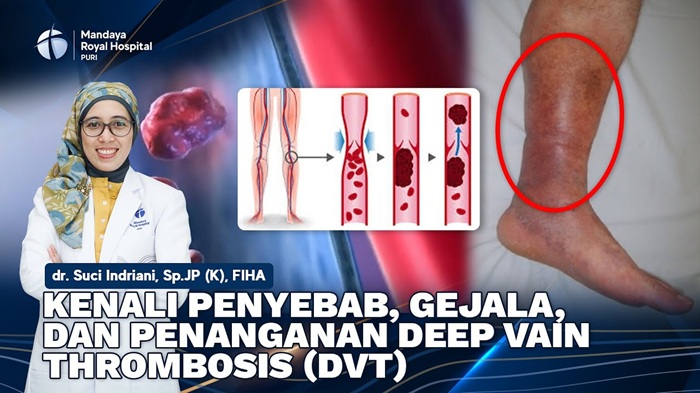
Deep Vein Thrombosis (DVT) is a serious condition that occurs when a blood clot forms in the deep veins of the body, most commonly in the legs. According to Dr. Suci Indriani, Sp.JP (K), FIHA, a cardiologist, vascular medicine consultant, and interventional cardiologist at Mandaya Royal Hospital Puri, cases of DVT have been increasingly frequent, especially since the COVID-19 pandemic.

“In Indonesian, DVT is called trombosis vena dalam. It refers to the formation of blood clots inside the veins. Veins are the blood vessels that carry blood back from the legs and other organs to the heart,” explains Dr. Suci.
Deep vein thrombosis is part of venous thromboembolism, the third most common cause of cardiovascular-related deaths after heart attacks and stroke.

Contents
Why Does DVT Occur?
According to Dr. Suci, there are three major causes of DVT:
1. Damage to the blood vessel wall
“Blood vessel wall damage usually occurs due to injury. For example, patients undergoing catheterization or those who need vascular access for dialysis often experience some level of blood vessel trauma,” says Dr. Suci.
2. Abnormalities in the blood itself
Certain factors can make blood clot more easily. “During COVID-19, blood became much more prone to clotting due to hyperviscosity,” she explains. Some individuals may also have inherited clotting disorders.
3. Stasis or slow blood flow
“Stasis means the blood flow is sluggish. One of the causes is prolonged immobilization,” states Dr. Suci. Examples include patients who must lie down for long periods after major surgery.
Symptoms of DVT to Watch Out For
DVT may cause leg pain or swelling, though some patients show no visible symptoms. Dr. Suci highlights several typical characteristics of DVT-related swelling:
- Swelling in one leg (not both)
- Significant pain — not just soreness
- Possible redness in the swollen area
- Pain persists even after taking regular painkillers
- Swelling continues throughout the day, though it may lessen slightly in the morning
“If it’s DVT, the swelling usually appears in one leg and is accompanied by pain because the blood flow is obstructed. This is different from regular swelling, which usually isn’t very painful,” explains Dr. Suci.
How DVT Differs from Regular Swelling
Dr. Suci emphasizes that DVT-related swelling is different from other conditions:
Swelling from a sprain:
- Localized around a specific joint
- History of injury
- May include bruising
Swelling from heart failure:
- Usually affects both legs
- Not very painful
Swelling from DVT:
- One leg (or a specific area)
- Significant pain
- Possible redness
- Persistent swelling
Who Is at Risk of Developing DVT?
Dr. Suci outlines several groups at higher risk:
1. Patients after major surgery
“Patients undergoing major procedures like total hip or total knee replacement must stay in bed for long periods, which slows blood flow,” she explains.
2. Genetic predisposition
“If there’s a family history of DVT, the risk increases because genetic factors may be involved,” says Dr. Suci.
3. Individuals who remain immobile for long periods
People on long-distance flights, or those on bed rest after surgery, illness, or injury, face increased risk. “Long flights with minimal movement can contribute to DVT,” she adds.
4. Autoimmune disease patients
“Autoimmune conditions have become more common, and they also increase the tendency for blood to clot,” she says.
5. Cancer patients
“Cancer itself promotes blood clotting. If a cancer patient experiences leg swelling, they should never go for a massage. It must be examined because it could be DVT,” stresses Dr. Suci.
Economy Class Syndrome: Myth or Fact?
Many people refer to “economy class syndrome,” where legs swell after long flights. Dr. Suci explains: “When you sit for a long time on flights, the legs are compressed and movement is limited. That’s why passengers are advised to walk or move their legs to prevent stasis.”
Long flights indeed increase the risk of DVT. However, not all post-flight swelling is DVT. “It could be varicose veins or DVT. That’s why it needs to be examined,” she says.
The Importance of Early Diagnosis
Dr. Suci emphasizes the need for prompt testing if DVT is suspected. “The simplest tests are laboratory exams. Another essential test is vascular ultrasound (Doppler USG) to check if there is leakage or blockage in the vessels.”
A D-dimer blood test can help rule out blood clot formation if the result is negative.
The Danger of Massaging a Swollen Leg Caused by DVT
A common but dangerous mistake is massaging a swollen leg without understanding the cause.
“In the community, swollen legs are often assumed to be related to bones or muscles, so people go to massage therapists. This is where the mistake happens,” says Dr. Suci.
“Manipulation or massage can dislodge the clot, causing a fatal complication called pulmonary embolism,” she warns.
When to Seek Medical Attention
Deep Vein Thrombosis is a serious condition requiring immediate medical treatment. If you experience unusual leg swelling, especially accompanied by pain, consult a vascular specialist promptly.
Dr. Suci Indriani, Sp.JP (K), FIHA is a cardiologist with specialized expertise in vascular medicine and interventional cardiology, practicing at Mandaya Royal Hospital Puri. With extensive experience in managing DVT and its complications, Dr. Suci provides accurate diagnoses and optimal treatment for vascular conditions.
For further consultation, you may contact:
Mandaya Royal Hospital Puri — Dr. Suci Indriani, Sp.JP (K), FIHA, Cardiologist, Vascular Medicine & Interventional Cardiology Consultant
Clinic Hours:
- Monday: 17:00 – 20:00 WIB
- Friday: 17:00 – 20:00 WIB
To make your visit easier, use the Chat via WhatsApp feature, Book Appointment service, or the Care Dokter app available on Google Play and the App Store to manage queue numbers and access complete visitor information.