


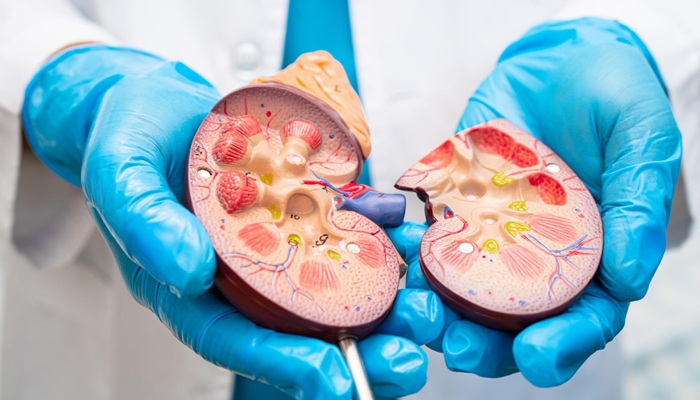
Kidney donation is a medical procedure that requires extensive preparation and thorough evaluation. In Indonesia, several requirements must be met before a person can be declared eligible as a kidney donor. These criteria are intended to ensure the donation process is safe and conducted according to established health standards.
These requirements fall into two main categories: medical requirements and administrative requirements. Both are outlined in government regulations to guide the proper execution of kidney donation and transplantation. By understanding these criteria, potential donors can better prepare for the evaluation process.

Contents
Kidney Donor Requirements in Indonesia
Below are the complete medical and administrative requirements to become a kidney donor in Indonesia:
Medical Requirements for Kidney Donors
- Aged between 18 and 60 years old.
- Physically and mentally healthy.
- Blood type must be compatible with the recipient.
- Body Mass Index (BMI) below 30 kg/m².
- Does not smoke.
- Free from narcotics, alcohol, or illegal substances.
- Not pregnant.
- No history of prior organ transplantation.
- Normal blood pressure.
- Not diagnosed with diabetes.
- No cancer or history of malignancy.
- Free from autoimmune diseases.
- No vascular disorders.
- Not on long-term routine medication.
All the above criteria will be confirmed through physical examinations and additional tests. If the donor is declared eligible, they may proceed to the next stage of preparation.
Administrative Requirements for Kidney Donors
According to the Regulation of the Minister of Health of the Republic of Indonesia No. 38 of 2016, kidney donors must fulfill the following administrative requirements:
- Possess a medical clearance letter confirming eligibility as a donor.
- Be at least 18 years old and submit valid identification such as ID card, family card, or birth certificate.
- Provide a written statement confirming that the donation is done voluntarily without receiving wages, gifts, or any form of compensation.
- Clearly explain the voluntary reason for donating a kidney to the recipient.
- Obtain consent from family members such as a spouse, adult child, biological parents, or siblings.
- Sign a statement confirming understanding of the indications, contraindications, risks, transplant procedures, and post-transplant lifestyle.
- Sign a declaration confirming that the donation process does not involve organ trading or any form of agreement with the recipient.
Medical Examinations for Kidney Donors
If a potential donor meets all medical and administrative requirements, several preparatory assessments will be conducted, including:
- Blood type testing to confirm compatibility.
- Crossmatch test, combining donor and recipient blood samples to detect potential antibody reactions.
- HLA typing to evaluate genetic marker compatibility.
- Complete blood tests, including organ function evaluation and serology tests.
- Urine test to assess kidney and urinary tract condition.
- Chest X-ray to evaluate lung and chest cavity health.
- Detailed kidney evaluation through imaging or kidney function tests.
- ECG to assess heart condition and function.
- Comprehensive physical examination as the final health assessment.
Kidney Transplant Services at Mandaya Royal Hospital Puri
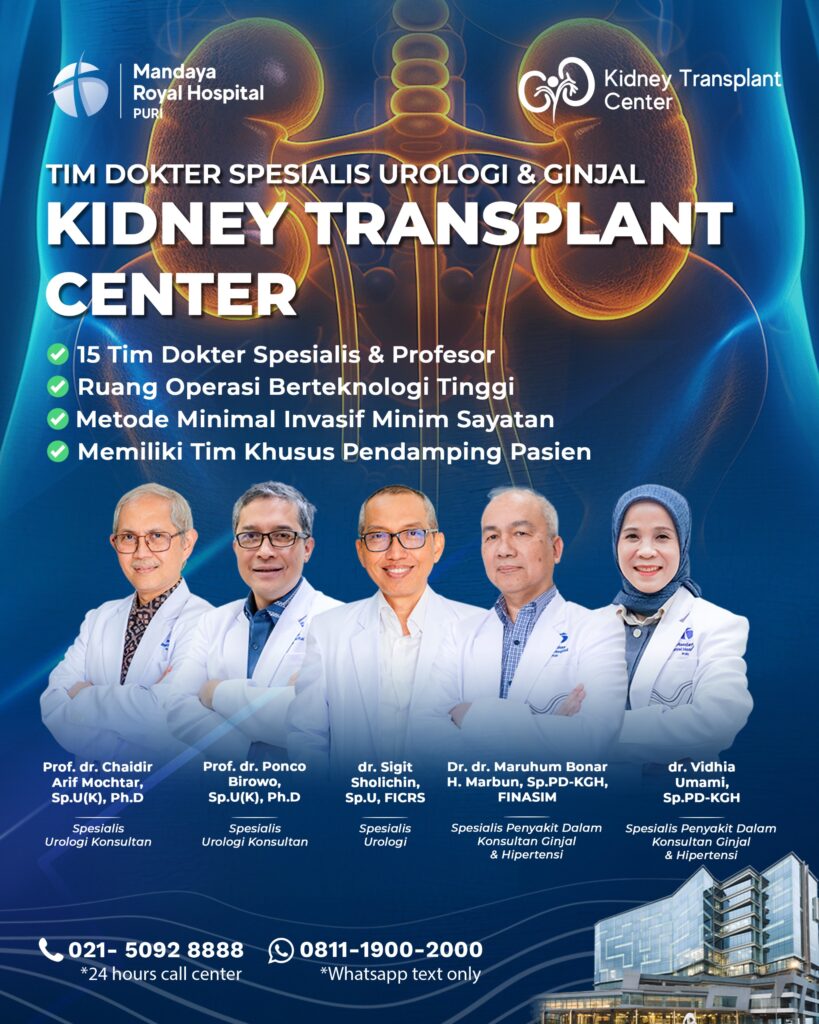
Mandaya Royal Hospital Puri provides a range of modern medical facilities designed to support successful kidney transplant procedures. The hospital features dedicated operating rooms for both donor and recipient, positioned side by side to ensure faster organ transfer and maintain optimal kidney quality. Each operating room is equipped with advanced sterilization systems, positive-pressure HEPA air filtration, and complete monitoring devices to reduce the risk of cross-contamination and enhance workflow efficiency.
The hospital is also equipped with Laparoscopic Kidney Ultrasound technology, a real-time imaging system that assists surgeons in performing minimally invasive kidney procedures. This technology provides detailed visualization of the kidney, enabling higher precision, reducing bleeding risk, shortening surgery duration, and speeding up recovery time.
Additionally, Mandaya Royal Hospital Puri uses the Hemosphere Advanced Hemodynamic Monitor to track a patient’s hemodynamic condition throughout the transplant process. This device displays real-time data on blood pressure, blood flow, and heart function, allowing anesthesiologists to respond immediately to any changes. This ensures the patient remains stable during and after surgery.
To make your visit easier, you can contact Mandaya Royal Hospital Puri through WhatsApp Chat, Book Appointment, or the Care Dokter app—available on Google Play and the App Store—to check queue numbers and access complete service information.