


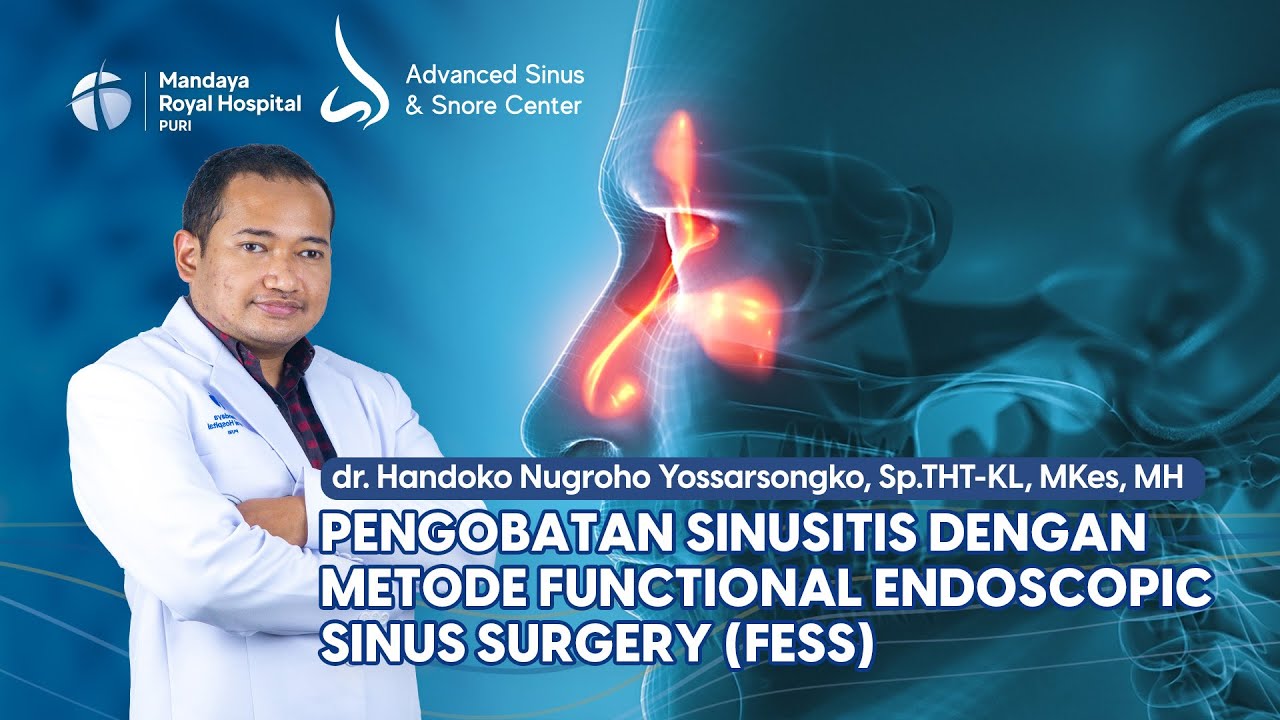
Sinusitis is a common inflammatory condition affecting the nose and sinus cavities. According to dr. Handoko Nugroho, Sp.THT-KL from Mandaya Royal Puri Hospital, this inflammation generally occurs when the sinus drainage system does not function properly. As a result, fluid may accumulate inside the sinus cavities, leading to symptoms that interfere with daily activities, such as nasal congestion, prolonged runny nose, headaches, and reduced sense of smell.

Contents
Causes and Symptoms of Sinusitis

Sinusitis develops when the drainage pathways of the sinuses become blocked, allowing bacteria or germs to grow and trigger inflammation. According to dr. Handoko, the most common symptoms include:
- Nasal congestion
- Runny nose or excessive mucus
- Headache
- Loss of smell
These symptoms indicate that there is a disturbance within the sinus cavities, requiring further medical evaluation.
How Is Sinusitis Diagnosed?
Sinusitis diagnosis is performed in two primary steps:
1. Symptom Evaluation
The doctor begins by assessing the patient’s complaints and symptoms as described above.
2. Nasal Endoscopy
A nasal endoscopy allows the doctor to directly visualize the inside of the nasal cavity. Through this procedure, the doctor can assess:
- Enlargement of the turbinates (nasal tissues that can expand or shrink)
- Presence of mucus or discharge
- Septal deviation (crooked nasal septum)
- Presence of nasal polyps
These findings help determine the severity of sinusitis and whether medical treatment alone is sufficient, or if further intervention is needed.
Stages of Sinusitis Treatment
1. Maximum Medical Therapy (Maximal Medikamentosa)
dr. Handoko emphasizes that the first-line treatment for sinusitis always involves medication. This therapy lasts for 6–12 weeks and includes:
- Oral medications
- Nasal spray medications
If symptoms improve after 6–12 weeks, surgery is not necessary.
2. CT Scan Evaluation When Medication Fails
If symptoms persist despite medication, a sinus CT scan will be recommended to evaluate the sinus cavities in detail. The scan can reveal:
- Turbinate enlargement
- Septal deviation
- Fluid-filled maxillary, ethmoid, or frontal sinuses
If the CT scan shows significant obstruction, surgery becomes the next recommended step.
FESS: Minimally Invasive Sinus Surgery
FESS (Functional Endoscopic Sinus Surgery) is a minimally invasive sinus surgery performed using an endoscope. According to dr. Handoko, this method does not require external incisions, as the entire procedure is performed through the nostrils using specialized instruments.
Benefits of FESS include:
- No external incisions (minimal scarring)
- Enhanced accuracy using endoscopic visualization
- Reopens blocked sinus drainage pathways
- Performed under general anesthesia, ensuring patients do not feel pain
The purpose of FESS is to restore proper sinus drainage. The doctor widens narrow or blocked sinus passages. If additional issues such as septal deviation (crooked nasal bone) are found, corrective procedures can be performed during the same surgery. If the septum is normal, no bone-breaking is required.
When Does a Patient Need Surgery?
Surgery is recommended only when:
- Medical therapy for 6–12 weeks does not improve symptoms
- The patient continues to experience sinus obstruction
- Headaches and other symptoms persist
- CT scan results show fluid buildup, polyps, or structural abnormalities
dr. Handoko reiterates that sinusitis does not always require surgery. Surgery is only considered when medications fail to provide adequate improvement.
dr. Handoko’s Practice Schedule at Mandaya Royal Puri Hospital

You can consult dr. Handoko Nugroho, Sp.THT-KL at Mandaya Royal Puri Hospital during:
- Tuesday: 16:00 – 20:00 WIB
- Thursday: 16:00 – 20:00 WIB
- Saturday: 13:00 – 16:00 WIB
For easier access to Mandaya Royal Puri Hospital, you may use the WhatsApp Chat feature, Book Appointment, or the Care Dokter app, available on Google Play and the App Store, to check queue numbers and get complete information regarding your visit.