


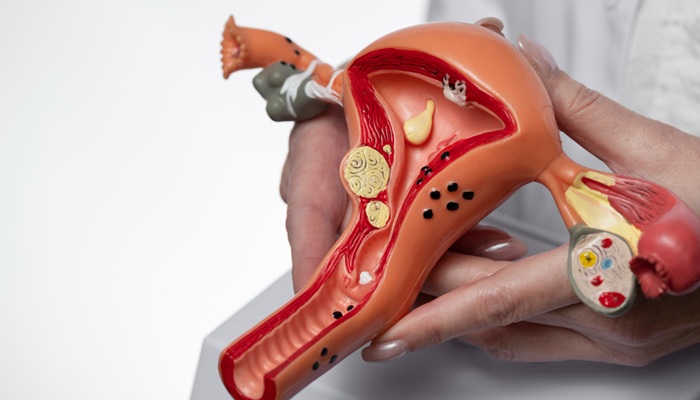
Uterine fibroids are benign (non-cancerous) tumors that grow from the muscular tissue of the uterine wall (uterus). Although not cancerous, they can cause various symptoms, such as heavy menstrual bleeding, prolonged periods, pelvic pain, a feeling of fullness in the abdomen, and even fertility problems in some women.
Based on their location, uterine fibroids are divided into four types: intramural, subserosal, submucosal, and pedunculated. Each type has different characteristics and symptoms depending on its position and size within the uterus.
The good news is that fibroid treatment does not always require surgery. At Mandaya Royal Hospital Puri, HIFU (High-Intensity Focused Ultrasound) technology is available as a non-surgical procedure that uses focused ultrasound waves to destroy fibroid tissue without any incisions. This approach offers lower risks, no surgical wounds, and a relatively faster recovery time.

Contents
Types of Uterine Fibroids
Below are the types of uterine fibroids you should be aware of:
1. Intramural Fibroids
Intramural fibroids are the most common type of uterine fibroids. They grow within the muscular layer of the uterine wall (myometrium). As they enlarge, intramural fibroids can cause the uterus to appear enlarged and create a feeling of pressure or fullness in the pelvic area.
Symptoms of intramural fibroids include:
- Heavier or longer menstrual periods
- Pelvic pain or pressure
- Frequent urination (if pressing on the bladder)
- Lower back pain
Because they grow within the uterine wall, large intramural fibroids can alter the shape of the uterus, potentially affecting fertility and pregnancy in some women.
2. Subserosal Fibroids
Subserosal fibroids develop on the outer surface of the uterus, just beneath the outer lining called the serosa. They grow outward and may protrude into the pelvic cavity. Unlike other types, subserosal fibroids typically do not cause heavy menstrual bleeding but more often cause symptoms due to pressure on surrounding organs.
Symptoms of subserosal fibroids include:
- Pelvic pain or discomfort
- Pressure on the bladder causing frequent urination
- Pressure on the rectum leading to constipation
- A feeling of abdominal fullness or visible enlargement
Because they grow outward, subserosal fibroids can become quite large before noticeable symptoms appear. In some cases, a mass may be felt in the lower abdomen.
3. Submucosal Fibroids
Submucosal fibroids are less common but often cause more severe symptoms. They grow just beneath the inner lining of the uterus (endometrium) and may protrude into the uterine cavity.
Symptoms of submucosal fibroids include:
- Very heavy, prolonged, or irregular menstrual bleeding
- Passing blood clots during menstruation
- Anemia due to excessive blood loss
- Fertility problems or recurrent miscarriages
Because they disrupt the inner lining of the uterus, submucosal fibroids are most commonly associated with abnormal uterine bleeding and may interfere with embryo implantation, making pregnancy more difficult.
4. Pedunculated Fibroids
Pedunculated fibroids are characterized by a thin stalk that attaches them to the uterus, rather than growing directly from the uterine wall. If they grow on the outer surface with a stalk, they are called pedunculated subserosal fibroids. If they grow beneath the inner lining and extend into the uterine cavity with a stalk, they are known as pedunculated submucosal fibroids.
Symptoms of pedunculated fibroids generally include:
- Pelvic pressure or discomfort
- Sudden, sharp pelvic pain (if the stalk twists, a condition known as torsion)
- Symptoms similar to subserosal or submucosal fibroids, depending on their location
On imaging tests, pedunculated fibroids may sometimes resemble an ovarian mass. Because they have a stalk, they carry a higher risk of causing acute pain if torsion occurs.
Which Type of Fibroid Is Most Common?
Intramural fibroids are the most frequently diagnosed type. Their location within the uterine muscle wall often leads to symptoms such as heavy menstruation and pelvic pressure.
However, many women have more than one type of fibroid at the same time. This combination can influence the variety and severity of symptoms experienced.
Which Type of Fibroid Causes the Most Symptoms?
Submucosal fibroids are generally considered the type most likely to cause noticeable symptoms, especially abnormal uterine bleeding. Because they grow just beneath the inner lining of the uterus and protrude into the uterine cavity, they interfere with the normal shedding process of the endometrium during menstruation.
As a result, patients may experience extremely heavy or prolonged periods, which can increase the risk of anemia. Even small submucosal fibroids can cause significant symptoms compared to larger fibroids located elsewhere.
Understanding HIFU Technology for Fibroids at Mandaya Royal Hospital Puri
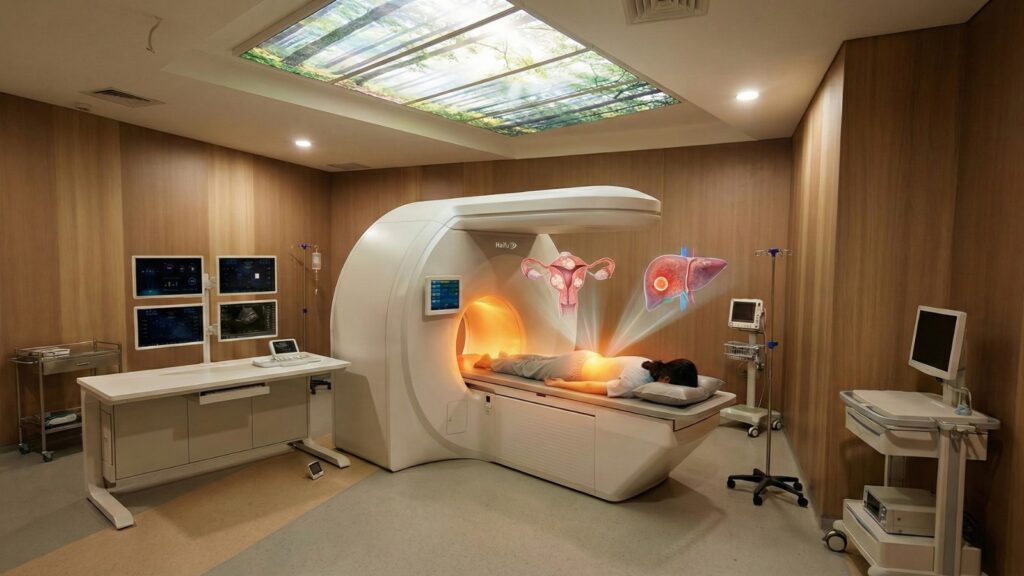
HIFU is a modern technology used to treat uterine fibroids without surgery. This non-invasive procedure does not require any incisions. HIFU works by directing high-intensity focused ultrasound waves from outside the body toward the fibroid tissue inside the uterus. At the targeted point, the energy generates high temperatures that destroy fibroid cells without damaging surrounding healthy tissue.
In principle, HIFU uses precise imaging guidance to accurately map the fibroid’s location. The heat energy induces coagulative necrosis (cell death) in the fibroid tissue. With high precision, this method selectively destroys benign tumor tissue while preserving the overall structure of the uterus.
At Mandaya Royal Hospital Puri, HIFU is one of the more comfortable fibroid treatment options because it does not involve open surgery.
How HIFU Works in Treating Fibroids
Here are the main steps of HIFU therapy:
- Focused ultrasound targeting – High-energy ultrasound waves are directed precisely at the fibroid tissue identified through imaging.
- Heat generation – The ultrasound energy converts into localized high temperatures within the fibroid tissue.
- Fibroid cell destruction – The heat damages fibroid cells and triggers coagulative necrosis, effectively destroying the tissue.
- Protection of healthy tissue – The focused and controlled targeting protects the surrounding healthy uterine tissue.
- Natural shrinkage – After the fibroid cells are destroyed, the body gradually absorbs the treated tissue, and the fibroid shrinks over time.
Advantages of HIFU for Fibroid Treatment
HIFU offers several benefits compared to conventional surgery:
- Non-invasive – No incisions, resulting in lower risks of infection and bleeding.
- No radiation – HIFU uses ultrasound waves, not electromagnetic radiation or radioactive substances.
- No general anesthesia – The procedure is typically performed with mild sedation or analgesia, without full anesthesia.
- Fertility preservation – Precise targeting helps maintain the structure and function of the uterus, preserving future pregnancy potential.
- Faster recovery – Without surgical wounds, patients can usually return to normal activities relatively quickly.
With these advantages, HIFU has become a modern solution for women who wish to treat fibroids without undergoing major surgery.
To make your visit to Mandaya Royal Hospital Puri more convenient, you can use the Chat via WhatsApp feature, Book Appointment service, or the Care Dokter application available for download on Google Play and the App Store to check queue numbers and access complete information.